

Consultant Anaesthesia
Expert anaesthetic services for complex surgical procedures and medically compromised vulnerable patients.
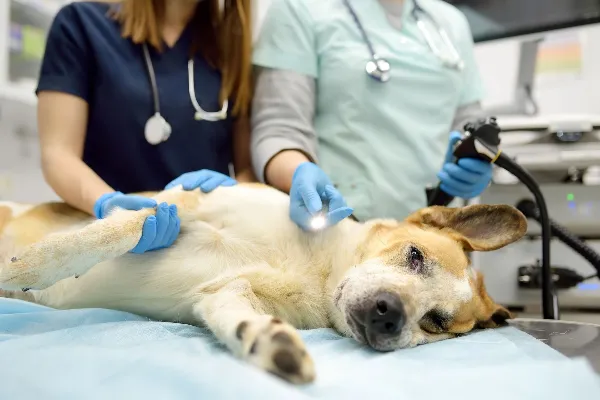

At some point, most pets will need to visit the vet. When they require surgery or a dental cleaning, the patient will need anesthesia, which can be an uncomfortable thought for many pet owners.
During the consultation, your veterinarian will mention “anesthetic risk” or refer to your pet’s “ASA status”. So, what does this mean for you and your pet? In this article, I will explain the meaning of ASA status (American Society of Anesthesiologists status) and what anesthetic risk is.
Anesthetic risk refers to the chance of complications occurring during anesthesia. Whenever a pet is put under anesthesia, there is some inherent risk, just as in human medicine.
This can include minor issues, such as a mild drop in blood pressure, or, in extremely rare cases, more complicated problems. The good news is that modern veterinary medicine has made anesthesia very safe. Significant studies have found that anesthetic-related fatality rates are as low as about 0.05% in dogs and 0.11% in cats in routine practice. To put that in perspective, 99.9% of pets survive anesthesia without serious issues. These percentages instil confidence in pet owners, and the numbers are impressively low; however, there is much room for improvement. My ambition is to advocate for the use of drugs, monitoring equipment, and training to make anesthesia safer than ever.
Of course, the risk isn’t zero, especially for pets with health problems or in emergencies. Anesthetic risk is not just about the procedure itself, but mainly about your pet’s overall health going into it. A healthy young animal will generally handle anesthesia better than a very sick or frail animal. This is why veterinarians perform pre-anesthetic exams and tests, such as blood work, to assess each animal’s condition beforehand.
When the anesthesiologist fully understands the animal’s health status, we tailor the anesthesia plan and take all the necessary precautions to minimise risk.
ASA status is a rating that vets use to summarise your pet’s health before anesthesia. ASA stands for the American Society of Anesthesiologists, the medical organisation that created this system for human patients. The ASA Physical Status Classification has been in use for over 60 years and has been adapted for veterinary patients.
The ASA is a scale from I to V (1 to 5) that categorises how healthy or ill a patient is before anesthesia. An ASA status is assigned to every animal undergoing sedation or general anesthesia as a means of communicating the pet’s condition and potential anesthetic risk.
You might see the letter “E” for emergency. If a procedure must be done urgently, the vet may add an “E” to the ASA status, for example, ASA II-E for an otherwise healthy pet that needs emergency surgery. This indicates that there is an emergency factor, which can slightly elevate the risk.
It’s important to understand that the ASA classification is primarily about the pet’s health status, not the pet’s age. Age itself is not a disease or condition, so it isn’t explicitly part of the ASA rating. A healthy 12-year-old cat might be ASA I or II, whereas a very sick 2-year-old cat could be ASA III or IV.
ASA status is a valuable tool for anesthetic planning and safety. It provides a standardised way to assess a pet’s stability and to communicate any pre-anesthetic health issues.
By categorising a patient as ASA I, II, III, IV or V, we can anticipate the level of risk and plan accordingly. For example, a healthy ASA I pet may undergo a routine anesthetic protocol. In contrast, an ASA III pet with kidney disease may require additional IV fluids, specific anesthetic drug choices, and closer monitoring of blood pressure and kidney function during the procedure.
Before any anesthesia, the veterinarian will typically conduct a pre-anesthetic evaluation, which may include a physical exam and tests such as blood work, to identify any issues that might not be apparent externally. Based on those findings, they assign an ASA status and determine if any stabilisation or additional precautions are necessary before proceeding. For instance, if a dog is assessed and has a higher ASA due to dehydration and an infection, the vet may administer fluids and antibiotics first to improve the dog’s condition. The ASA status also guides the preparation of monitoring equipment, whether to have additional personnel or a specialist, such as a veterinary anesthesiologist, present, and what emergency medications or equipment might be on standby.
Importantly, ASA status alone does not predict or guarantee outcomes; however, it helps inform decision-making. Suppose your pet has a higher ASA rating. In that case, your vet will take appropriate measures to mitigate risk, such as referring to a specialist anesthesiologist.
As a pet owner, you don’t need to memorise all the ASA categories. However, it can be comforting to know what ASA status means when your veterinarian mentions it, and it can help you understand why certain precautions or tests are recommended.
In modern veterinary practice, anesthesia is a team effort, and your pet will be closely watched from start to finish. Clinics follow strict protocols, safety checklists, and monitoring standards to ensure a smooth process. Your vet may discuss options such as tailored drug choices, IV fluids, warming systems, blood pressure and oxygen monitors, among others, all of which are informed by careful planning based on your pet’s specific needs, which ASA status helps to define.
The ASA status is a way of saying, “Here’s how healthy or fragile your pet is right now.” It helps the team take the best possible care of your pet under anesthesia. The vast majority of pets, even seniors or those with medical issues, do great during anesthesia and wake up uneventfully, thanks to these individualised approaches and advances in care.

I aim to help pet owners and veterinarians understand why specialised anaesthesia matters and provide a trustworthy resource where you can find qualified, easy-to-understand information about every stage of the anaesthetic journey. From preparation to full recovery, I wish to ensure every pet receives the focused, one-on-one attention they deserve.
Visit The Anaesthesia Vet website for more information or book a consultation today.
Mobile expertise that elevates surgical outcomes through precision monitoring, targeted pain relief, and exclusive one-to-one attention.
Expert anaesthetic services for complex surgical procedures and medically compromised vulnerable patients.
Tailored strategies to prevent, control, and eliminate discomfort throughout recovery.
Compassionate comfort-focused care ensuring dignity and peace for end-of-life patients.
Remote consultations for anaesthetic planning, risk assessment, and owner guidance.
When complex cases demand specialist expertise, collaboration matters. Our anaesthetic partnership enhances patient outcomes while supporting your practice goals, providing seamless integration and clinical excellence for challenging procedures.

Focused on complex, high-risk cases, and there until your patient is stable.

We bring advanced equipment, specialist protocols, and tailored anaesthetic plans.

One specialist focused on your patient from pre-op assessment to recovery.

Advanced monitoring techniques and specialist equipment to protect the most vulnerable patients.

Clear clinical communication, transparent discussions, and coordinatedcare that builds confidence.

Professional partnerships with leading practices throughout Brisbane, Gold Coast, and Sunshine Coast.
“I cannot recommend Dr Kieren Maddern highly enough. She has cared for both of my tiny, health-compromised Pomeranians, who are high risk when it comes to anaesthesia. As a very anxious owner, the thought of putting them under is always stressful, but knowing Dr Kieren is in control makes all the difference.”
“Working with Kieren brings a sense of calm and confidence to even the most complex cases. With her managing anaesthesia, we can focus entirely on dentistry, knowing every detail of patient safety is being handled with care and precision.”
“Kieren shares our passion for cats. Her specialist training and knowledge allowed us to safely pursue treatments that required anaesthesia in a manner that ensured the utmost safety for Mr Gibbs. Her level of planning, communication, and care was extraordinary.“


