
Your dog still deserves the treatment they need. A heart murmur means it's planned with extra care.
Heart murmur and anaesthesia: what happens next?
6 October, 2026
/
Your dog needs a dental, imaging or surgery. Then your vet mentions a heart murmur, and suddenly the procedure isn’t the main worry anymore.
Is the anaesthetic too risky now? Does your dog need to see a cardiologist first? Would it be safer to skip the procedure altogether?
If your dog is older, or this is the first you’ve heard of the murmur, those questions can land hard. It’s natural to want to protect them from any extra risk, even when the procedure is meant to help.
Here’s the short answer: a heart murmur doesn’t automatically rule out anaesthesia. It does mean your dog needs an individual assessment first, looking at what’s causing the murmur, how they’re feeling now and what the procedure involves.
Below, we walk through what that assessment involves and what to ask your vet.
What does a heart murmur mean in dogs?
A heart murmur is an extra whooshing sound your vet hears alongside the normal “lub-dub” of the heart. It’s caused by blood flowing turbulently instead of smoothly, often because a heart valve isn’t closing properly, which is common in older small-breed dogs.
Murmurs are graded from 1 (very soft) to 6 (very loud), but loudness doesn’t always reflect how serious the problem is. On its own, a murmur doesn’t tell your vet what’s causing it or how much the heart is affected.
Two dogs with a heart murmur can have very different needs. One might be active and comfortable, with no obvious symptoms. Another might have a diagnosed heart condition, be on medication, or be slowing down on walks.
Their age, general health and procedure can be completely different too, so each dog needs an anaesthetic plan built around them.
What will my vet check before my dog's anaesthetic?
Before anaesthesia, your vet will look at your dog’s full health picture, including:
• whether the cause of the murmur has been investigated, or a heart condition diagnosed
• any changes in breathing, energy or how they cope with exercise
• current medications, and when they were last given
• recent vet or cardiology reports
• other health conditions
• how they’ve coped with anaesthesia before
• the procedure itself: what it is, how urgent it is and how long it’s likely to take
If your dog has seen a veterinary cardiologist, make sure the treating team has the report and any recent test results.
Other conditions matter as much as the heart. A dog with a murmur may also have kidney disease, breathing problems or a hormonal condition, and all of it goes into the same plan. If kidney disease is part of the picture, our article Is anaesthesia safe for dogs with kidney disease? explains how that changes the approach.
Ask the treating team whether your dog’s usual medication should be given on the day. Don’t stop, change or delay any medication unless they tell you to.
Does my dog need heart tests before anaesthesia?
Possibly. Not every dog with a murmur needs the same tests before anaesthesia.
It depends on what’s already known, whether your dog has symptoms, when they were last examined and what procedure they need. Sometimes the existing information is enough to build a plan. Other times, your vet may recommend further investigation or a cardiologist’s input before going ahead.
Either way, the aim is to understand how stable your dog’s condition is before deciding what happens next.
How does heart disease change a dog's anaesthetic plan?
Anaesthesia affects circulation, blood pressure and breathing. When a dog has a known or suspected heart condition, those effects need careful planning.
There’s no single “heart patient” protocol. The plan is built around the type of heart condition, its stability, the medications your dog is on, and the upcoming procedure.
Anaesthesia isn’t a switch that’s flicked off and on. From the moment your dog drifts off until they wake, their heart rate, breathing, blood pressure and oxygen levels are watched and adjusted moment to moment. For a dog with a heart condition, that attention matters even more.
Can a dog with a heart murmur have a dental?
Often it’s possible, with the right assessment and an anaesthetic plan built around your dog. It’s also one of the most common decisions owners face, and one of the hardest. Your dog has painful teeth that need treatment, and the murmur makes the anaesthetic feel frightening.
It can feel like choosing between two risks. But putting off a necessary dental indefinitely has its own cost. Dental disease can cause ongoing pain, make eating harder and wear down your dog’s quality of life.
A more useful question than “Is my dog allowed to have a dental?” is “What does my dog need for this procedure to be planned properly?”
For one dog, that’s a review of recent records and blood results. Another may need further heart assessment first. A more complex patient may benefit from specialist anaesthesia support, or treatment somewhere with more resources on hand.
When should a specialist vet anaesthetist be involved?
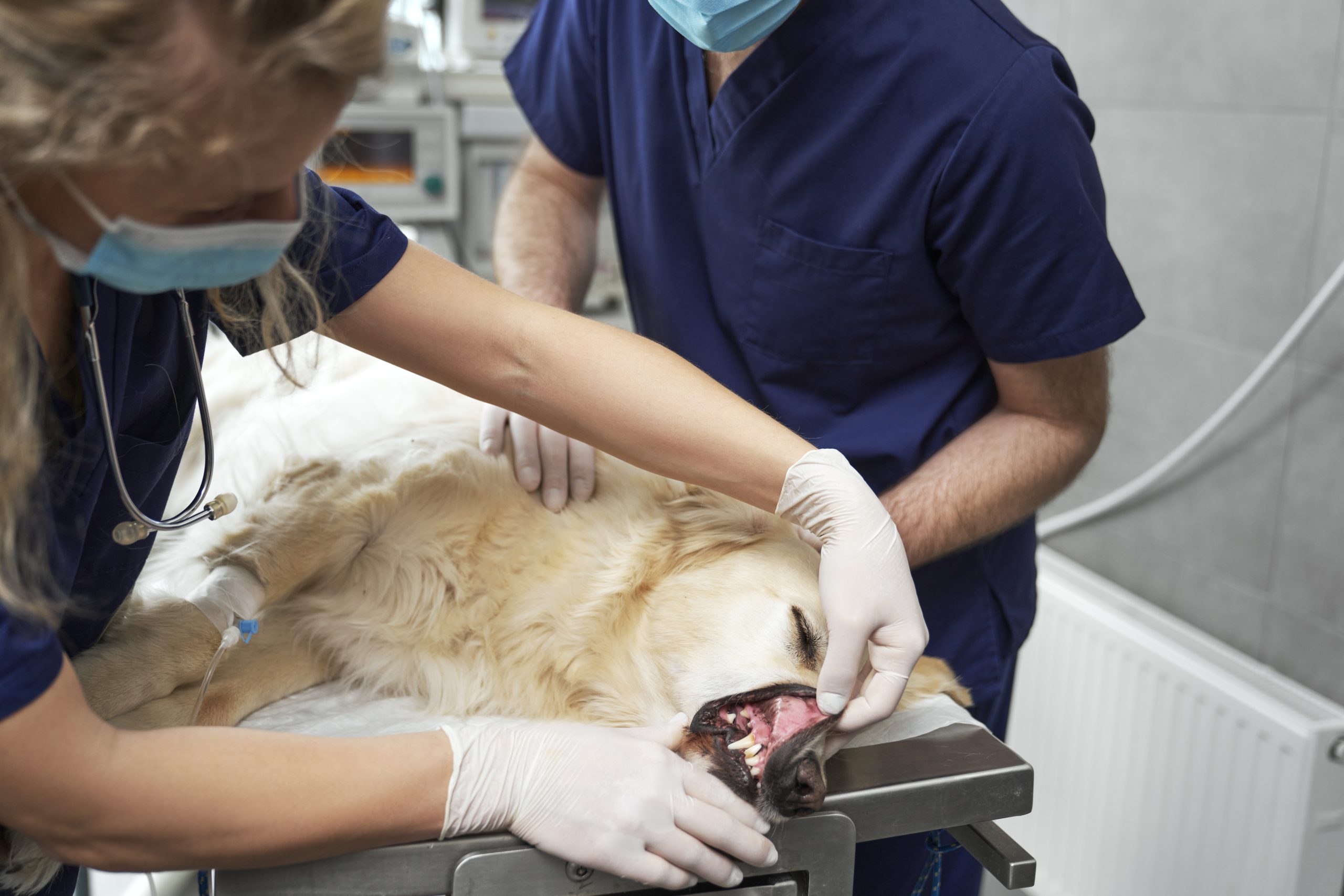
Most routine anaesthetics are managed by your regular clinic’s team. A specialist veterinary anaesthetist may be brought in when a dog has a heart condition, several health issues at once, a history of anaesthetic complications, or a long or complex procedure ahead.
At The Anaesthesia Vet, I work alongside your regular vet and, where relevant, your dog’s cardiologist. Think of your vet as the one steering the procedure, while I keep the flight steady: watching every heartbeat and breath, managing pain relief and guiding your dog through recovery, so your vet can focus fully on the dental, surgery or imaging.
Depending on what your dog needs, that care can happen at your regular clinic or in a referral hospital with more equipment and support on hand.
What should I ask my vet before my dog's anaesthetic?
It helps to write these down before your appointment. When you’re worried about your dog, it’s easy to forget things in the room.
1. Do we know what’s causing my dog’s heart murmur?
2. Is their condition stable right now?
3. Do they need any more tests before the procedure?
4. Has the team got their latest vet or cardiology reports?
5. Should I give their usual medication on the day?
6. How will they be monitored during anaesthesia and recovery?
7. Would specialist anaesthesia support help?
8. Is my regular clinic the right place for this procedure?
You know your dog better than anyone. If they’ve been slower on walks, coughing, tiring more easily or breathing differently at rest, tell your vet. Those details help shape the plan.
The verdict: can my dog with a heart murmur have anaesthesia?
A heart murmur is important information, but it’s one finding. What matters is what’s causing it, how your dog is today, any other conditions they have, the treatment they need and the support around them.
Sometimes that assessment means the procedure goes ahead with a tailored plan. Sometimes it means more information or stabilisation first. Sometimes it changes where or how the procedure happens.
Specialist anaesthesia support in Brisbane, the Gold Coast and the Sunshine Coast
If your dog has a heart murmur and needs a dental, surgery or diagnostic procedure, start with your regular vet. They can review your dog’s current health and talk through whether further assessment or specialist anaesthesia support makes sense.
The Anaesthesia Vet provides mobile specialist anaesthesia and pain management for pets and veterinary teams across Brisbane, the Gold Coast and the Sunshine Coast. Your vet can refer your dog’s case or get in touch to discuss the next step.
This article is general information only. Your vet should assess your dog’s individual health and advise on their treatment and anaesthetic needs.
Anaesthesia Services
Mobile expertise that elevates surgical outcomes through precision monitoring, targeted pain relief, and exclusive one-to-one attention.

Consultant Anaesthesia
Expert anaesthetic services for complex surgical procedures and medically compromised vulnerable patients.

Pain Management
Tailored strategies to prevent, control, and eliminate discomfort throughout recovery.

Palliative Care
Compassionate comfort-focused care ensuring dignity and peace for end-of-life patients.

Telehealth
Remote consultations for anaesthetic planning, risk assessment, and owner guidance.
Trusted by Vets. Valued by Families.
When complex cases demand specialist expertise, collaboration matters. Our anaesthetic partnership enhances patient outcomes while supporting your practice goals, providing seamless integration and clinical excellence for challenging procedures.

Specialist Anaesthetist
Focused on complex, high-risk cases, and there until your patient is stable.

Mobile, Personalised Clinic Care
We bring advanced equipment, specialist protocols, and tailored anaesthetic plans.

Dedicated
Throughout
One specialist focused on your patient from pre-op assessment to recovery.

Advanced Monitoring & Gold Standard Care
Advanced monitoring techniques and specialist equipment to protect the most vulnerable patients.

Supporting Teams & Clients
Clear clinical communication, transparent discussions, and coordinated care that builds confidence.

Trusted Across Queensland
Professional partnerships with leading practices throughout Brisbane, Gold Coast, and Sunshine Coast.
FAQs
Does a heart murmur mean my dog can't have anaesthesia?
No. A heart murmur doesn’t automatically rule out anaesthesia, but your dog may need further assessment and an individual plan. Your vet will look at the cause of the murmur, any symptoms, your dog’s overall health, and the procedure your dog needs.
Does the grade of my dog's heart murmur decide their anaesthetic risk?
The grade is one part of the assessment. The underlying heart condition, whether your dog has symptoms, their medications, other health conditions and the planned procedure all shape the anaesthetic plan.
Does every dog with a heart murmur need to see a cardiologist before anaesthesia?
Not necessarily. It depends on what’s already known about the murmur, your dog’s current health and the procedure planned. Your vet will advise whether a cardiologist’s input is needed.
My dog is older and has a heart murmur. Are they too old for anaesthesia?
Age on its own isn’t a reason to rule out anaesthesia. What matters is your dog’s overall health, any conditions they have, how stable those conditions are and the procedure they need. Older dogs are more likely to have more than one health issue, so a thorough assessment beforehand is especially important.
Can a specialist anaesthetist come to my dog's regular clinic if they have a heart murmur?
Yes. The Anaesthesia Vet provides mobile specialist anaesthesia at partnered clinics across Brisbane, the Gold Coast and the Sunshine Coast. Your vet can send through your dog’s case details so Kieren can assess whether mobile support suits your dog.
“I cannot recommend Dr Kieren Maddern highly enough. She has cared for both of my tiny, health-compromised Pomeranians, who are high risk when it comes to anaesthesia. As a very anxious owner, the thought of putting them under is always stressful, but knowing Dr Kieren is in control makes all the difference.”
M Vincent - Pet Owner
“Working with Kieren brings a sense of calm and confidence to even the most complex cases. With her managing anaesthesia, we can focus entirely on dentistry, knowing every detail of patient safety is being handled with care and precision.”
Dr Aaron & Dr Bec, Advanced Animal Dentistry
“Kieren shares our passion for cats. Her specialist training and knowledge allowed us to safely pursue treatments that required anaesthesia in a manner that ensured the utmost safety for Mr Gibbs. Her level of planning, communication, and care was extraordinary.“