
“Kidney disease changes the anaesthetic plan. It doesn’t automatically take anaesthesia off the table.”
Is anaesthesia safe for dogs with kidney disease?
17 September, 2026
/
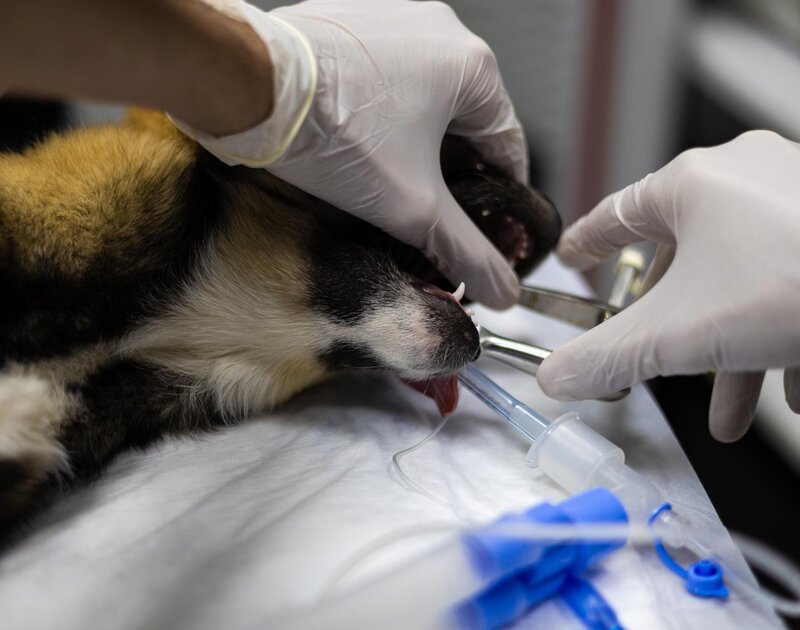
If your dog has kidney disease and has been told they need a dental, surgery, imaging or another procedure under anaesthesia, it is completely understandable if your first thought is: is the anaesthetic too risky?
It’s a question I hear regularly from pet owners across Brisbane, the Gold Coast and the Sunshine Coast, and the reassuring answer is that kidney disease does not automatically rule anaesthesia out.
It does mean we need to look more closely at the individual dog in front of us. How well are their kidneys functioning? How stable are they right now? Are there other health concerns in the mix? What procedure do they need, and what does that procedure stand to achieve?
Those are the questions that shape the anaesthetic plan.
Because with kidney disease, the goal is not to ignore the added risk. It is to understand it, plan for it and support that patient as carefully as possible from start to recovery.
Is anaesthesia safe for dogs with kidney disease?
There is no anaesthetic that is completely without risk, whether a dog has kidney disease or not.
With anaesthesia for dogs with kidney disease, though, there are extra layers to think through. The kidneys depend on a steady blood supply to keep doing their job, and anaesthesia can affect both circulation and blood pressure. Dogs with chronic kidney disease can also be more sensitive to dehydration or shifts in fluid balance.
So my first question is almost never just, “Does this dog have kidney disease?”
I want to know how advanced it is, whether it is stable, whether the dog is well hydrated, what their blood pressure looks like, what medications they are taking, whether there are other conditions in the mix, what procedure we are actually trying to achieve and how urgently it is needed.
Two dogs can carry the same diagnosis of chronic kidney disease and still need very different anaesthetic plans.
That is part of why understanding anaesthetic risk always starts with the individual patient rather than the diagnosis on the page.
Kidney disease isn’t one single level of risk
You may have heard your vet talk about your dog’s kidney “stage”.
Chronic kidney disease, often shortened to CKD, ranges from relatively mild disease picked up on routine testing through to more advanced disease that is clearly affecting how a dog feels day to day.
Vets typically look at blood results such as creatinine and SDMA alongside urine testing, blood pressure and the wider clinical picture to build up that fuller understanding.
One abnormal blood result does not tell us everything about anaesthetic risk. What matters is how all of those pieces fit together for your dog at that point in time.
A dog with stable kidney disease who is eating, drinking and well hydrated is a very different anaesthetic proposition to a dog who is dehydrated, unwell or going through a sudden deterioration in kidney function.
Sometimes that assessment tells us we can go ahead with an individualised plan. Sometimes it points to stabilising the patient first. Occasionally, it means a harder conversation about whether the procedure should be delayed or handled somewhere with more resources on hand.
There is no single formula that covers every case, and I would rather take the time to get that right than rush to a generic answer.
Why does blood pressure matter so much?
One of the bigger concerns during anaesthesia for dogs with chronic kidney disease is keeping circulation and blood pressure where they need to be.
The kidneys need blood flow to receive oxygen and continue functioning, and anaesthetic drugs can affect cardiovascular function, including blood pressure. That is why monitoring it closely becomes particularly important in patients whose kidney function is already under strain.
This is one of the reasons specialist anaesthesia is about much more than simply choosing a different drug.
Throughout the anaesthetic, I am continually reading how the patient is responding and adjusting the plan in real time. Blood pressure is considered alongside breathing, oxygenation, heart rate, temperature and the other information the patient and monitoring equipment are giving me.
It is a moment-to-moment job, not a set-and-forget one, and that patient has my full attention while they are under my care.
What about fluids? Aren’t more fluids better for the kidneys?
This is a genuinely common misconception, so it is worth unpacking.
Fluid therapy does form part of care for some pets with kidney disease. A dehydrated patient, for instance, may need their hydration corrected before anaesthesia.
What is not true is that more fluid is automatically better.
Fluid therapy has to be tailored to the individual patient. In dogs with more advanced kidney disease, pushing extra fluid does not simply “flush the kidneys”, and it can create its own problems. The aim is balance.
We want to support circulation and correct genuine dehydration where it is needed, without defaulting to large volumes on the assumption that every kidney patient needs them.
I would rather think in terms of supporting this individual dog’s physiology than following a blanket kidney protocol.
Can anaesthesia make kidney disease worse?
This is one of the questions owners worry about most, and understandably so.
Periods of poor circulation, very low blood pressure or dehydration during anaesthesia have the potential to be harder on kidneys that are already compromised. That is exactly why identifying kidney disease beforehand matters.
Knowing it is there lets us plan for it rather than react to it.
Before proceeding, your vet team may recommend updated blood work, urine testing, blood pressure measurement or other checks depending on your dog’s history and current condition.
The anaesthetic plan can then be built around whatever those results show.
I cannot tell you an anaesthetic is risk-free.
What I can tell you is that I take that responsibility seriously. I want to understand those risks as clearly as possible before we begin, plan around them, and stay focused on keeping the patient as stable as possible throughout the anaesthetic and the recovery that follows.
My dog has kidney disease and needs a dental. What should I do?
I see this dilemma often, and I know how heavy it can feel from the owner’s side.
A senior dog with chronic kidney disease may also have painful dental disease, leaving their family caught between two worries at once. They do not want their dog living with dental pain, but they are frightened the anaesthetic itself could be dangerous.
Avoiding anaesthesia indefinitely is not always the safest or kindest path.
Dental disease can cause real, ongoing discomfort, and proper treatment usually requires anaesthesia so the veterinary team can examine and treat the mouth thoroughly while protecting the airway and managing pain.
So the real question is not:
“Is my dog with kidney disease allowed to have a dental?”
It is:
“What does my dog need for this anaesthetic to be planned properly?”
For some patients, that means further testing first. For others, it may mean bringing in specialist anaesthesia support.
Either way, the decision should be based on your dog’s current health and the actual balance of risk and benefit, not on age or a kidney diagnosis alone.
Is my senior dog with kidney disease too old for anaesthesia?
Age and kidney disease often turn up together, which can make the whole decision feel even more daunting. Age on its own, though, is not a diagnosis, and I do not decide whether a patient can tolerate anaesthesia based on the number beside their name.
A 14-year-old dog with stable, well-managed medical conditions can be a very different patient from a much younger dog who is acutely unwell.
What I am actually looking at is what is happening inside that particular dog today.
Kidney function is part of the assessment, but so are heart and respiratory health, hydration, medications, mobility, pain, previous anaesthetic experiences and the procedure itself. Older age alone does not tell me whether a dog can tolerate anaesthesia. Their current health and the procedure in front of us are far more useful pieces of information.
When should a specialist vet anaesthetist be involved?
Most routine anaesthetics are handled safely by general veterinary teams. There are times, however, when having someone focused exclusively on the anaesthetic adds real value.
That might be when a dog has more advanced kidney disease, several medical conditions layered together, a previous difficult anaesthetic, a complex or lengthy procedure ahead, or simply when the vet or family wants an extra layer of specialist expertise involved.
I am not there to replace your regular vet or surgeon.
I work alongside them.
While they focus on the procedure itself, my attention stays on the anaesthesia, physiology, pain management and recovery. For dogs managing chronic illness, that dedicated focus can be particularly valuable because their needs may change throughout the course of a procedure.
What should I ask my vet before my dog’s anaesthetic?
If your dog has kidney disease, you are entitled to ask questions, and I encourage you to.
Useful questions include:
- How stable is my dog’s kidney disease at the moment?
- Do we need updated blood or urine testing before the procedure?
- Has my dog’s blood pressure been assessed?
- Does their hydration need addressing first?
- How will they be monitored throughout the anaesthetic?
- How will pain be managed?
- Does my dog have any other conditions that change their anaesthetic risk?
- Would a specialist vet anaesthetist be worth involving in this case?
You do not need to understand every number on a blood test or every piece of monitoring equipment.
You just need to come away feeling that your dog’s individual risks have genuinely been recognised, that there is a clear plan sitting behind them, and that someone in that room is paying close attention to how your dog is responding.
Sometimes the bigger risk is doing nothing
When owners are frightened of anaesthesia, the instinct to avoid it altogether is completely understandable.
I would just encourage families to weigh the other side of that decision too.
What happens if we don’t proceed?
If your dog is living with dental pain, needs a biopsy, requires imaging to reach a diagnosis or has a condition that genuinely needs surgical treatment, avoiding anaesthesia can carry consequences of its own.
That is not an argument for every procedure going ahead regardless.
It is an argument for properly weighing the risk of anaesthesia against the benefit of the procedure and the consequences of leaving the underlying problem untreated, rather than automatically choosing the option that feels safer in the moment.
That is often where owners begin to find the clarity they have been looking for, and I want them to leave that conversation feeling supported, not more frightened than when we started.
Kidney disease calls for a different plan, not automatic fear
Seeing abnormal kidney results ahead of a procedure your dog needs can make the whole situation feel frightening.
But a diagnosis of kidney disease, on its own, is not the answer to whether anaesthesia is possible.
It is information that helps us make a better decision.
The more we understand about your dog’s kidney function, hydration, blood pressure, other medical conditions and the procedure ahead, the more carefully the anaesthetic plan can be built around them.
That is what specialist anaesthesia is about.
Not pretending the risk is not there, but understanding it, respecting it and planning for the individual animal behind the diagnosis.
Because that animal, and the family who loves them, deserves nothing less.
Ready to Talk to a Specialist Veterinary Anaesthetist About Your Dog’s Kidney Disease?
Kidney disease changes how an anaesthetic is planned. It does not automatically rule one out.
With careful assessment, appropriate monitoring and an anaesthetic plan built around the individual patient, many dogs with kidney disease can still undergo procedures requiring anaesthesia.
The Anaesthesia Vet provides specialist veterinary anaesthesia and pain management support for patients and veterinary teams across Brisbane, the Gold Coast and the Sunshine Coast.
If your dog has kidney disease and you are worried about an upcoming procedure, speak with your regular veterinarian about whether specialist anaesthesia support may be appropriate, or contact The Anaesthesia Vet to discuss your dog’s individual needs.
Anaesthesia Services
Mobile expertise that elevates surgical outcomes through precision monitoring, targeted pain relief, and exclusive one-to-one attention.

Consultant Anaesthesia
Expert anaesthetic services for complex surgical procedures and medically compromised vulnerable patients.

Pain Management
Tailored strategies to prevent, control, and eliminate discomfort throughout recovery.

Palliative Care
Compassionate comfort-focused care ensuring dignity and peace for end-of-life patients.

Telehealth
Remote consultations for anaesthetic planning, risk assessment, and owner guidance.
Trusted by Vets. Valued by Families.
When complex cases demand specialist expertise, collaboration matters. Our anaesthetic partnership enhances patient outcomes while supporting your practice goals, providing seamless integration and clinical excellence for challenging procedures.

Specialist Anaesthetist
Focused on complex, high-risk cases, and there until your patient is stable.

Mobile, Personalised Clinic Care
We bring advanced equipment, specialist protocols, and tailored anaesthetic plans.

Dedicated
Throughout
One specialist focused on your patient from pre-op assessment to recovery.

Advanced Monitoring & Gold Standard Care
Advanced monitoring techniques and specialist equipment to protect the most vulnerable patients.

Supporting Teams & Clients
Clear clinical communication, transparent discussions, and coordinatedcare that builds confidence.

Trusted Across Queensland
Professional partnerships with leading practices throughout Brisbane, Gold Coast, and Sunshine Coast.
FAQs
Can my dog have anaesthesia if they have kidney disease?
Many dogs with kidney disease can still undergo anaesthesia, but the plan needs to be built around their individual kidney function, hydration, overall health and the procedure they need. Careful assessment beforehand helps determine what precautions may be appropriate.
Is anaesthesia more risky for a dog with kidney disease?
Kidney disease can add extra anaesthetic considerations, particularly around blood pressure, circulation and hydration. That is why pre-anaesthetic assessment and close monitoring are especially important for these patients.
Can anaesthesia make my dog’s kidney disease worse?
Periods of very low blood pressure, poor circulation or dehydration during anaesthesia have the potential to affect kidney function. Identifying kidney disease beforehand allows the anaesthetic plan and monitoring to be adjusted with those risks in mind.
Does the stage of my dog’s kidney disease affect anaesthetic risk?
Yes, although stage alone does not tell the whole story. A dog with stable, well-managed kidney disease may have a very different risk profile from a dog with the same stage who is dehydrated, unwell or experiencing a sudden deterioration. The whole clinical picture matters.
Can my dog with kidney disease still have a dental procedure?
Often, yes. Dental disease left untreated can cause ongoing pain, so the decision is usually not simply whether to avoid anaesthesia, but how to plan it appropriately. That may include further testing, stabilisation or specialist anaesthesia support depending on the individual dog.
Should I ask for a specialist veterinary anaesthetist for my dog with kidney disease?
It is worth discussing with your vet, particularly if your dog has more advanced kidney disease, other medical conditions, a previous difficult anaesthetic, or requires a complex or lengthy procedure. A specialist anaesthetist works alongside your regular veterinary team with a dedicated focus on anaesthesia, pain management and recovery.
Is my senior dog with kidney disease too high-risk for anaesthesia?
Age alone is not a reason to automatically rule anaesthesia out. What matters more is your dog’s current health, including how stable their kidney disease is, their hydration, medications, heart and respiratory health, and the procedure they need.
“I cannot recommend Dr Kieren Maddern highly enough. She has cared for both of my tiny, health-compromised Pomeranians, who are high risk when it comes to anaesthesia. As a very anxious owner, the thought of putting them under is always stressful, but knowing Dr Kieren is in control makes all the difference.”
M Vincent - Pet Owner
“Working with Kieren brings a sense of calm and confidence to even the most complex cases. With her managing anaesthesia, we can focus entirely on dentistry, knowing every detail of patient safety is being handled with care and precision.”
Dr Aaron & Dr Bec, Advanced Animal Dentistry
“Kieren shares our passion for cats. Her specialist training and knowledge allowed us to safely pursue treatments that required anaesthesia in a manner that ensured the utmost safety for Mr Gibbs. Her level of planning, communication, and care was extraordinary.“